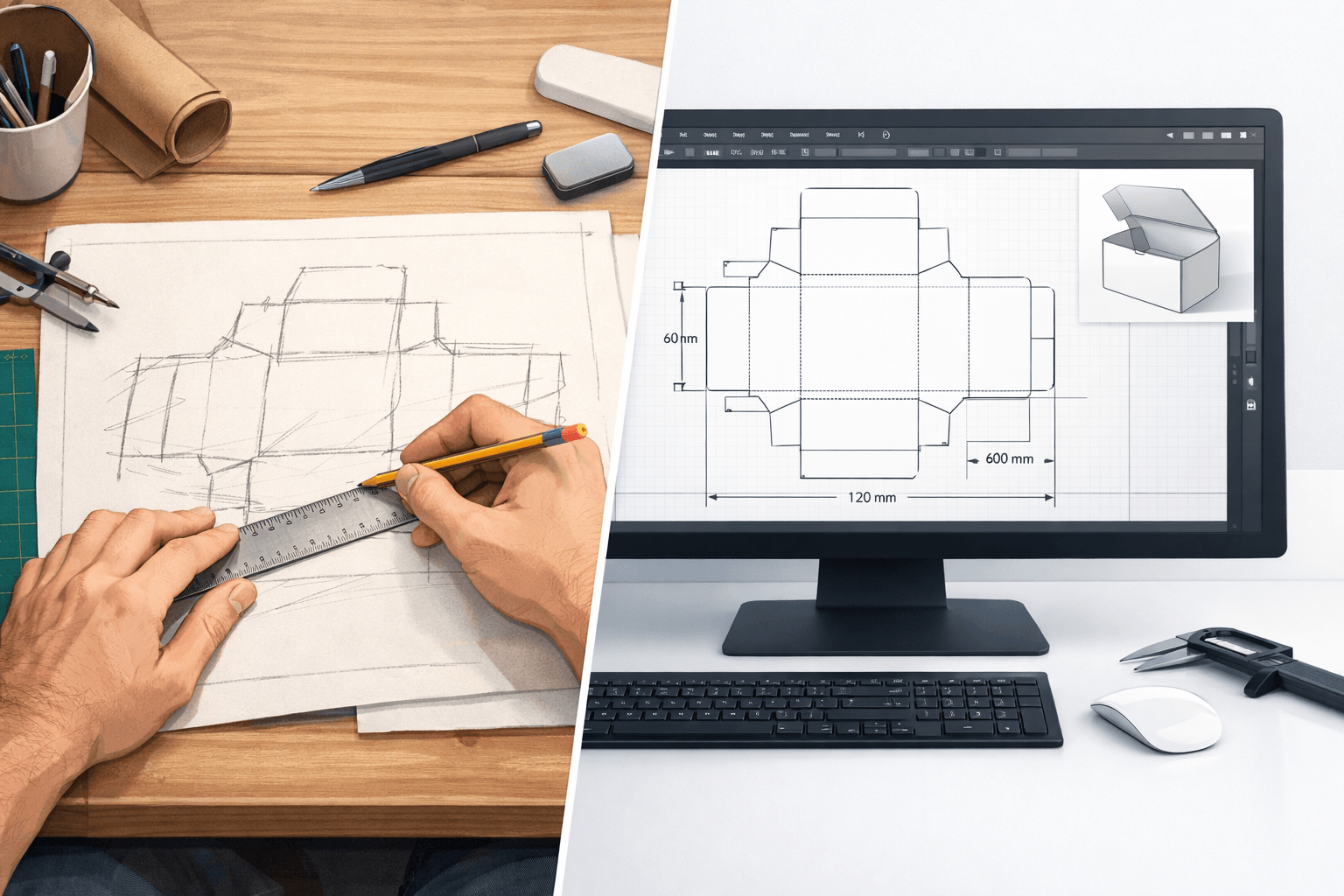
In the world of packaging design, creating accurate dielines is a critical step. Traditionally, designers have relied on manual CAD drawing to craft every line and fold. However, with the rise of specialized packaging design tools like Carton Maker, the process has become faster, more precise, and far less tedious. In this article, we compare manual CAD drawing with automated dieline generation and explore why modern designers are making the switch.
The Challenges of Manual CAD Drawing
Drawing packaging dielines manually in CAD software requires:
- Deep technical knowledge of packaging structures
- Time-consuming line-by-line drafting
- High risk of human error in measurements and folds
- Repetitive tasks for standard box styles
- Difficulty in making quick adjustments or iterations
While manual CAD offers full control and customization, it can be inefficient for most commercial packaging needs, especially when speed and accuracy are essential.
The Power of Packaging Design Tools
Modern packaging design software, such as Carton Maker, revolutionizes dieline creation by:
- Providing a library of industry-standard box templates (Fefco, ECMA, etc.)
- Allowing users to input dimensions and instantly generate precise dielines
- Automating complex calculations for folds, glue flaps, and tolerances
- Enabling quick modifications and real-time previews
- Exporting production-ready files for cutting and printing
Key Benefits of Automated Dieline Generation
- Speed: Generate complex dielines in seconds instead of hours.
- Accuracy: Minimize errors with built-in packaging standards and automatic calculations.
- Consistency: Ensure uniformity across multiple projects and team members.
- Productivity: Free up designers to focus on creativity and branding, not repetitive drafting.
- Scalability: Easily handle large volumes of packaging designs for different products.
When Manual CAD Still Matters
Manual CAD drawing remains valuable for highly custom or experimental packaging concepts where standard templates do not apply. It also allows for complete creative freedom in unique projects.
Conclusion: The Smart Choice for Modern Packaging
For most packaging professionals, the advantages of automated dieline generation far outweigh the traditional manual approach. Tools like Carton Maker empower designers to work faster, reduce errors, and deliver high-quality packaging solutions at scale. As the packaging industry continues to evolve, embracing smart design tools is key to staying competitive and efficient.